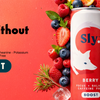
Coming to Sprouts · October 2026 →
What Is a Caffeine-Free Energy Drink? A 2026 Buyer's Guide

The category sounds like a contradiction. Energy drinks built their reputation on caffeine. So "caffeine-free energy drink" reads, at first glance, like ordering the spicy version of vanilla ice cream.
It is not a contradiction. The category has become one of the fastest-growing segments in functional beverages, built on ingredients your body already uses to produce focus and steady energy. No caffeine required. This guide covers how the good ones work and the red flags that should stop you at the shelf.
Short version:
A caffeine-free energy drink uses functional ingredients (L-theanine, lion's mane, B vitamins, adaptogens) instead of caffeine to produce alertness and focus. The good ones feel like a steady, gentle lift. The bad ones taste like flavored vitamin water with a marketing budget. Sly BOOST is built on the first model.
What Is a Caffeine-Free Energy Drink, Exactly?
Same shape as a standard energy drink (12 to 16 ounce can, bright flavor, sold for focus). Different chemistry inside.
A traditional energy drink delivers 80 to 300 mg of caffeine to block adenosine receptors and create the feeling of being awake. That mechanism is also the exact reason for the crash, the jitters, the elevated heart rate, and the sleep disruption the Cleveland Clinic flagged in its category review. A caffeine-free version supports the systems your body uses to produce energy on its own (amino acids, nootropic mushrooms, B vitamins). The table below makes the difference clear.
Old vs New Energy Drink Mechanics
| Feature | Traditional Energy Drink | Caffeine-Free Energy Drink |
|---|---|---|
| Active mechanism | Blocks adenosine with caffeine | Supports natural energy systems via L-theanine, lion's mane, B vitamins |
| Onset | 7 to 15 minutes | 20 to 40 minutes |
| Duration | 2 to 4 hours, then crash | 4 to 6 hours, no crash |
| Sleep impact | Caffeine half-life is 5 hours; can disrupt sleep up to 8 hours later | None |
| Tolerance build | Yes; doses escalate over time | No |
| Withdrawal | Headaches, fatigue, fog (3 to 10 days) | None |
Why Caffeine-Free Drinks Actually Work
Three ingredients do most of the heavy lifting.
L-theanine
An amino acid found almost exclusively in green tea. Studies link it to increased alpha brain wave activity, the brain state associated with relaxed, focused alertness. The research-backed dose is 100 to 200 mg. Anything below 50 mg is marketing. The NIH NCCIH has good summaries of the data.
Lion's mane
A nootropic mushroom (Hericium erinaceus) with credible clinical research behind it. A 2009 study in Phytotherapy Research found that 1,000 mg of lion's mane extract daily for 16 weeks produced measurable cognitive improvements in adults aged 50 to 80 [1]. Source matters: look for "fruiting body extract," not "mycelium on grain." The second is mostly filler.
B-complex vitamins
B6, B12, folate, and niacin convert food into ATP, the molecule your body uses for energy. Deficiency produces fatigue. Replenishing gives a subtle but real lift, especially for diets short on leafy greens or animal protein.
FIELD NOTE FROM THE SLY FORMULATION TEAM
During our formulation testing, the common failure point we saw across the caffeine-free category was L-theanine dosed below 50 mg. At that level you get the front-of-can claim without the alpha-wave effect. Read the supplement panel, not the marketing copy.
5 Ingredients That Separate Real From Marketing
Flip the can. Scan the supplement panel for these five.
- L-theanine, 100 to 200 mg. The single most important ingredient. Lower doses do not produce the alpha-wave effect.
- Lion's mane extract, 250 to 500 mg. Fruiting body source, with the species name (Hericium erinaceus) on the label.
- B-complex vitamins. B12 and B6 in micrograms or milligrams, not just "% Daily Value."
- Adaptogens with named extracts. "Ashwagandha root extract (KSM-66)" is honest. "Adaptogenic blend" is marketing.
- Electrolyte content in milligrams. No sodium and potassium on the panel means no real hydration.
4 Red Flags That Should Stop You at the Shelf
- "Proprietary blend" with no individual doses. Hides how little of each named ingredient is actually in the can.
- "Natural caffeine" or "caffeine from green tea." Still caffeine. Either phrase on a "caffeine-free" can disqualifies it.
- Sugar above 4 grams, or sweeteners you cannot pronounce. Sucralose and acesulfame potassium cause digestive issues for a meaningful slice of drinkers.
- Fruit imagery plus a back panel promising "energy" with no functional ingredient named. If the formulation cannot be defended, it does not exist.
Decision Matrix: Match the Drink to the Job
| If your goal is... | Reach for... |
|---|---|
| Hard alertness in 10 minutes | Coffee or a caffeinated energy drink |
| 2 to 4 hours of focus, after 2pm | A caffeine-free energy drink (Sly BOOST) |
| Hydration (you mistook thirst for fatigue) | Sparkling water with electrolytes |
| Sleep at 11pm tonight | Sly DREAM, not anything caffeinated |
| Quitting caffeine without a 5-day headache | Caffeine-free drink plus magnesium glycinate |
Inside Sly BOOST
L-theanine at the research dose. Standardized lion's mane fruiting body extract. A B-complex stack with meaningful B12 and B6. Zero caffeine. Zero sugar. Zero sucralose. We built the formula to pass the label test above before we wrote a line of marketing.
Best for the post-lunch hour, pre-deadline focus, or mornings when coffee is off the table. Try Sly BOOST Berry or browse all BOOST flavors.

Frequently Asked Questions
Are caffeine-free energy drinks actually effective?
The good ones, yes. Modern formulations use ingredients with peer-reviewed effects at meaningful doses. The supplement panel tells you which is which.
How long does one take to kick in?
20 to 40 minutes. Caffeine is faster (7 to 15 minutes), but caffeine-free formulations last roughly twice as long with no crash.
Will it help me quit caffeine?
It can. Cold-turkey quitters experience headaches, fatigue, and mental fog for 5 to 10 days, per Mayo Clinic guidance. A caffeine-free drink gives your brain the focus signal it expects without the caffeine. Read our jitters guide for the taper protocol.
Is L-theanine safe daily?
Yes. Studies show L-theanine is well-tolerated at doses up to 400 mg daily for at least 8 weeks. Check with your doctor if you are on medication.
The Bottom Line: What to Buy and What to Skip
A caffeine-free energy drink is not a paradox. The good ones produce a calmer, longer, more useful lift than caffeine ever did. The bad ones are flavored water with a marketing budget. Use the label test: L-theanine at 100 mg or more, lion's mane from fruiting body extract, real B vitamins, no proprietary blends, no hidden caffeine. If the can passes, the drink will deliver.
96px circle]
Authored by: The Sly Team
Combined experience: 25+ years across functional beverage formulation, sports nutrition, and DTC food science.
Specialties: caffeine-free energy formulation, sleep stack design (melatonin and magnesium), adaptogen sourcing, and consumer-facing supplement education.
The in-house formulation and editorial group behind drinkonthesly.com. We support focus, calm, and rest. About the team | LinkedIn
Sources
- Mori K, Inatomi S, Ouchi K, Azumi Y, Tuchida T. "Improving effects of the mushroom Yamabushitake (Hericium erinaceus) on mild cognitive impairment: a double-blind placebo-controlled clinical trial." Phytotherapy Research, 2009. onlinelibrary.wiley.com
- Cleveland Clinic, "Are Energy Drinks Bad for You?" Accessed May 2026. health.clevelandclinic.org
- Mayo Clinic, "Caffeine: How much is too much?" Accessed May 2026. mayoclinic.org
- National Center for Complementary and Integrative Health (NIH), "Green Tea." Accessed May 2026. nccih.nih.gov
General information, not medical advice. Talk to your doctor before changing your caffeine intake if you have a heart condition, are pregnant or nursing, or are managing anxiety, sleep, or blood pressure issues.